Tug of Logic is a web-app that serves as virtual infrastructure to philosophical dialogue and civil discourse.
PLAY Tug of Logic
It represents a radical new way to play philosophy and enact democracy.
Players work together to establish claims that persuade others. Success at persuading is made instantly visible to all players via shared monitor, allowing for cognitive social feedback.
It is an original competitive-collaborative game that develops logical competencies in a modified debate setting.
Technically, there are various game-formats and several Modes of Play of Tug of Logic. Learn more here.
In general terms, Tug of Logic:
- is played live with 25-30 people, who have phones (or Internet-connected devices)
- game begins with Straw Poll and ends with a Final Poll.
- The Straw Poll sets up a controversial statement (called the MainClaim) for discussion.
- Players enter and debate reasons one at a time; selected reasons are put on display, revisable in real-time, and either earn sufficient voting support or do not (Logic Referee’s call).
- Tug of Logic is animated by a Logic Referee (who runs the Straw Poll to determine whether the MainClaim suits the players present; facilitates discussion on reasons for or against the MainClain; keeps the game on track and brings it to a close). The Logic Referee needs a degree of logical sophistication (relative to the players) and, for large games, an assistant, called Line Judge.
- The game ends with a Final Poll, which identifies winners (i.e., players who during the course of the game changed their mind on the MainClaim). Winners get the last word.
The familiar norms of fair play are a game equivalent of (normative) logic.
What You’ll Need
To participate, all players need an Internet-connected device such as a phone or laptop. The Logic Referee needs a laptop to run the game, plus — importantly — a large public-facing monitor or projector screen, which serves an essential social-feedback function for the group.
Why It Works
The contemporary deluge of informational resources has arguably dampened social capacity for critical thinking, for sustained connected thought privately or together. We are ever more isolated by virtual connectedness. Tug of Logic makes reasoning social, engages participants who encounter embodied others with opposing points of view, while yet mediating their conciliation through Internet-based phone voting with real-time results that inform gameplay. In Tug of Logic, one wins only by changing one’s mind. Reasonableness is rewarded and celebrated with nominal fun prizes, while those who fail to persuade others are encouraged as a sporting try.
Now more than ever in this post-truth era, public deliberation must learn again to listen logically, to evaluate arguments critically, to identify weak evidence and fallacious reasoning, and to recognize the reasonable Other.
Tug of Logic is interactive: anyone can step-up to make their pitch, to try to carry the room; and any two can take part in the role-plays or debates; all audience members serve as field judges, voting in realtime with their phone to show exactly how effective attempts to reasonable persuade have been.
Benefits
A facilitated discussion in the context of a game of Tug of Logic:
- instill norms of reason and reasoned conversation;
- exploits familiar norms of fair play as game-equivalent of normative logical;
- encourages collaboration in the spirit of fair and friendly competition;
- increases individual participation by making it easy to submit, vote on, and revise own reasons;
- builds logical sophistication and dialogue skill;
- brings precision to the wording;
- increases awareness of critical issues concerning logical validity (sufficiency of evidence), as well as standards and burdens of proof;
- encourages the expression and revision of opinion based on social feeback;
- discourages and sidelines unfocused and unhelpful contributions to the discussion;
- unifies participant motivation (reduces showboating; pandering, non-sequitors, etc.);
- avoids pedantry by gamifying logic.
Tug of Logic improves arguments through play, and develops players through friendly competition governed by the sporting values of betterment, fun, inclusiveness, respect, and fair play.
Contrary to the adversarial model of debate, in which only those who lose learn, in these truth games one wins only by changing one’s mind. Only reasonableness is rewarded, undercutting the idiosyncrasy of standard modes of public participatory philosophy.
See It In Action
Tug of Logic, being played at the Canadian Museum for Human Rights during the 2023 Canadian National High School Ethics Bowl.
From Café Philosophy to Tug of Logic
Tug of Logic grew out of dissatisfaction with Café Philosophy, a form of public participatory philosophy that I facilitated weekly for twelve years. Café Philosophy has recognized defects, including a lack of rigour and criticality, unscrutinized personal criteria of truth, and no measure of successful participation. Perhaps the chief problem, for a philosophically, is the lack of logical sophistication in arguments, which Tug of Logic, as a competitive-collaborative social reasoning game, was specifically designed to address.
Tug of Logic is the next generation of Cafe Philosophy.
The random play of opinion that plagued cafe philosophy and contemporary political discourse cannot compete in this game, which is designed to be a place where truthiness withers, and alternative facts come to die.
Tug of Logic is designed to overcome recognized defects of traditional Cafe Philosophy by requiring a shared (though contestable) criterion of truth, recasting the principles of logic as rules of fair play, and valorizing rethinking.
For more about Traditional Café Philosophy, see:
Picard, Michael. (2015). “But is it Philosophy? Cafe Philosophy and the social coordination of inquiry,” pp. 163-181, in Practicing Philosophy, A. Fatić & L. Amir (eds.), Cambridge Scholars Publishing, 2015; also presented at 13th International Conference on Philosophical Practice, Belgrade, Serbia. Aug., 2014.
This article, critical of my own facilitation practice, is reprinted in the following book:
Café Conversations: Participatory Philosophy in Public Spaces. Edited, with contributions and translations by Michael Picard. Rock’s Mills Press, September, 2024.
That collection also includes my translation of the initial chapters of a book by Café Philo inventor, Marc Sautet, as well as accounts from various countries of several café philosophy practices. The first theoretical explorations in the new defined area of public participatory philosophy are appear in that book.
Finally, my own attempts to stimulate philosophizing amongst the general public can be found here:
How to Play Philosophy: A Book for Public Thinking and the Thinking Public. Hamilton Books (Rowman & Littlefield), February, 2022.
For more on Tug of Logic, see:
Café Conversations: Participatory Philosophy in Public Spaces. Rock’s Mills Press, September, 2024.
This book also includes the most comprehensive statement to date of Tug of Logic, and offers a through justification of it in terms of Anthony S. Laden’s theory of social reasoning.
Laden, Anthony Simon. (2012). Reasoning: A Social Picture. Oxford: Oxford University Press.
The book, Café Conversations, reprints are related article by Laden.
Ready to try it yourselves?
| Jump straight into the game: |
PLAY Tug of Logic
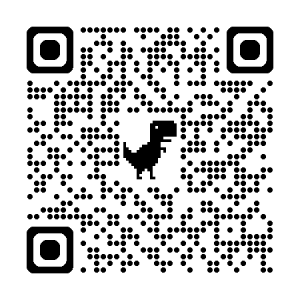
Scan this QR code to get to tug-of-logic.com |

You must be logged in to post a comment.